
Your step by step resource from Platinum Home Exteriors for handling storm damage the right way
You hear it before you see it. The wind shifts, the sky turns that sickly green color, and within minutes, your neighborhood is getting hammered by hail, driving rain, or straight-line winds that send tree limbs flying. It passes in twenty minutes, maybe thirty. Then you step outside, look up at your roof, and wonder what just happened up there.
If you live in Newark or anywhere in Licking County, this is not some rare scenario. The Newark area has recorded 35 severe weather warnings over the past 12 months. Central Ohio sits in a region where warm Gulf moisture collides with cooler northern air, creating conditions that produce powerful thunderstorms, damaging hail, and wind events that roofers remember for years. Ohio has experienced 69 billion-dollar severe storm events since 1980, and our corner of the state has been hit hard more than once.
At Platinum Home Exteriors, we have been on the front lines after every major storm that has rolled through Licking County. We have inspected so many damaged roofs, worked alongside insurance adjusters, and helped our neighbors put their homes back together. This guide puts all of that experience into your hands, so you know exactly what to do, what to watch for, and how to protect yourself when the next storm hits.
How Central Ohio Storms Damage Your Roof
Not all storm damage looks the same because not all storms behave the same. Understanding the type of weather event that just passed through helps you and your contractor know where to look and what to expect.
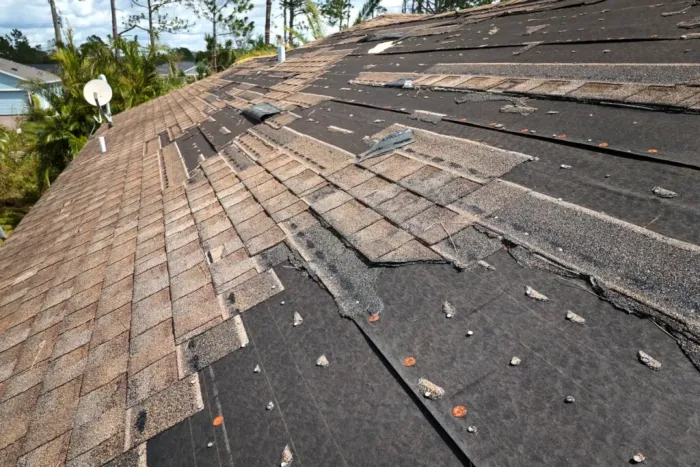
The spring severe weather season, roughly March through June, brings the most dramatic events to Licking County. Supercell thunderstorms produce large hail that can bruise shingles, crack ridge caps, and dent metal flashing and gutters in a matter of minutes. Hail damage Newark homeowners deal with ranges from barely visible granule loss to outright shingle fractures, depending on the size and density of the hailstones. The tricky part is that even small hail, stones the size of a nickel or dime, causes cumulative damage. Each impact displaces protective granules and weakens the shingle beneath. You might not see a problem today, but that weakened area becomes a leak pathway within a year or two.
Summer thunderstorms tend to hit fast and hit hard. The wind component is often the biggest threat during July and August events. Straight line winds exceeding 60 miles per hour are more common in central Ohio than most people realize, and derecho events, those long-lived complexes of severe thunderstorms that produce widespread wind damage, have swept through our region multiple times in recent decades. These events do not just blow off a few shingles. They can lift entire sections of roofing, tear flashing from chimneys, and send debris crashing into roof surfaces at high speed.
Winter brings its own form of assault. Ice storms coat everything with a heavy glaze, adding tremendous weight to your roof structure. Ice dams form at the eaves when attic heat melts snow that refreezes at the cold roof edge, and the water backing up behind those dams can work its way under shingles and into your home. Heavy, wet snow loads stress older framing, and the freeze-and-thaw cycles that define Ohio winters exploit every crack and opening on your roof.
Here is what catches many homeowners off guard. The damage from any of these events may be completely invisible from the ground. You can stand in your driveway, look up, and see nothing wrong while hundreds of hail strikes or dozens of lifted shingle seals quietly compromise your roof above. That is why storm-damage roof repair in Newark, Ohio, starts with a professional inspection, not a visual scan from your yard.
What to Do Immediately After Severe Weather
The first thing to do after a storm passes is not to act rashly. Take a breath. Make sure your family is safe. Then begin a methodical process that protects both your home and your future insurance claim.
Start with a ground-level assessment of your entire property. Walk the perimeter and look for fallen branches, displaced siding, dented gutters, and shingle debris in the yard. Finding pieces of shingles on the ground tells you something came off the roof, but not finding debris does not mean the roof is fine. Take photographs of everything. Photograph your roof from every angle you can reach from the ground. Photograph any debris in the yard. Photograph your gutters, your siding, and any other damage you notice. Use your phone’s timestamp feature to date each image. These photos become critical evidence later.
Please do not climb on your roof. We say this every single time, and we mean it every single time. Damaged roofing is slippery and unpredictable. Structures can be weakened by wind or impact and may not support your weight. Professional roofers carry insurance and use safety equipment for good reason. The possible emergency room visit is not worth the information you might gather.
If your roof is leaking or you can see significant damage, such as missing shingles or possible holes, take reasonable steps to prevent further water intrusion. Call a professional quickly; they can address the situation and help prevent more damage by doing temporary fixes or applying tarps. Tarping an exposed area or placing containers to catch leaks counts as temporary mitigation. Your insurance policy probably requires you to mitigate further damage, and it almost certainly covers the reasonable cost of doing so. Save every receipt. Document every temporary fix with photos.
For emergency roof repair, Licking County homeowners should have a trusted contractor’s number saved before storm season arrives. Scrambling to find a reputable person while water drips from your ceiling is stressful and leads to poor decisions. Having that relationship established ahead of time means one phone call gets help on the way.
Navigating Your Insurance Claim Without Leaving Money on the Table
Newark, OH, homeowners often tell us that filing a roof insurance claim feels overwhelming. The paperwork, the phone calls, the unfamiliar terminology. It does not need to be that complicated if you understand how the process works and where the common pitfalls are.
Contact your insurance company to report the storm and request an inspection. Be factual and specific. Tell them the date of the storm, what type of weather occurred, and that you would like your property inspected for possible damage. Do not guess at the extent of the damage and do not minimize it. Both extremes can hurt your estimate. Simply report what happened and let the inspection determine the rest.
Understand a critical distinction in your policy before you file. Insurance covers sudden damage from specific events. It does not cover gradual wear and deterioration. A tree limb that punches through your roof during a windstorm is covered. Shingles that have slowly worn out over fifteen years are not. The trouble arises when storm damage and pre-existing wear occur on the same roof, which is common in older Newark homes. A skilled adjuster can distinguish between the two. An inexperienced one might attribute storm damage to wear or vice versa, and both mistakes cost you.
This is where having a knowledgeable roofing contractor at your side pays for itself. When the insurance adjuster arrives, having your roofing contractor present ensures someone with roofing expertise is identifying damage alongside someone whose job involves managing claim costs. We recommend this and offer it as an option at Platinum Home Exteriors. We walk your roof with the adjuster, making a point to inspect areas they might miss, explaining why certain repairs are necessary. We will then provide professional documentation to support your claim. Good adjusters appreciate working with contractors who know their stuff because it makes their job easier and their report more accurate.
Pay close attention to the timelines to report your insurance claim, as Ohio law sets specific deadlines for insurance companies to acknowledge, investigate, and issue payments. If your insurer drags its feet, the Ohio Department of Insurance is a resource you should know about. They handle consumer complaints and can intervene when insurance companies do not follow the rules. Their website and phone line exist specifically to help homeowners in situations like this.
If your claim gets denied or the approved amount seems too low, do not accept it as the final answer. Request a written explanation for the denial. Ask for a reinspection. Provide supplemental documentation from your contractor. Many initial denials are reversed or increased when homeowners present proper evidence. Your local insurance agent can also be an advocate during disputes. They know the system and the adjusters, and they want to keep your business.
Storm Chasers and How to Spot Them
Guaranteed within 24 hours of any significant storm in Licking County, you will see trucks with out-of-state plates start appearing in neighborhoods. Storm Chaser crews fan out, knocking on doors offering free inspections and promises that sound too good to question. This happens after every major weather event, and every time, some homeowners get burned.
Storm chasers are roofing crews that travel from disaster to disaster across the country. They collect as many contracts as possible, perform the work quickly using the cheapest materials and labor they can find, and leave town before problems surface. Their business model depends on volume and speed, not quality or relationships. They have no reason to care about your satisfaction because they will never see you again.
Red flags to watch for include contractors who show up unsolicited at your door, anyone who offers to waive your insurance deductible (which is illegal in Ohio and constitutes insurance fraud), companies that pressure you to sign a contract before your insurance company has inspected the damage, and crews that cannot provide a verifiable local address and phone number. Ask for their Ohio contractor’s license number. Request certificates of insurance and call the insurer to verify that the policy is active. A legitimate company will provide all of this without hesitation.
We have seen the aftermath of storm chaser work on Newark roofs. Shingles were installed without proper starter strips. Flashing is sealed with caulk rather than properly integrated. Ventilation was left unchanged or even worsened. These shortcuts save the storm chaser time and money, but leave you with a roof that fails years before it should. When you call the number on your warranty, it sometimes rings to a disconnected line. At Platinum Home Exteriors, our address is local, our phone number works year-round, and our reputation matters to us because this community is our home, too.
Be Ready Before the Next Seasonal Storm Hits
Seasonal storms are a fact of life in central Ohio, and they are going to keep coming. It’s not a matter of if your roof will be put to the test, but when and how ready you will be when that moment arrives.
Preparation starts today. Review your homeowner’s insurance policy and understand your deductible and coverage terms. Take photos of your roof in good condition, so you have a baseline for comparison after future storms. Save the number of a local roofing contractor you trust. These simple steps take an hour and can save you weeks of frustration later.
At Platinum Home Exteriors, we have spent years building relationships throughout Newark and Licking County, one roof and one family at a time. When a storm rolls through, our phones ring because our neighbors know we will show up, give them an honest assessment, and guide them through whatever comes next. That trust is something we have earned and protect with every job we take on.
If you are reading this after a storm and wondering whether your roof is okay, call us. If you are reading this on a sunny day and just want to be prepared, call us then, too. A quick inspection can identify vulnerable areas before they become expensive problems. Either way, you will get a straight answer from people who are not going anywhere.
Storm damage questions? Need a post-storm inspection?
Contact Platinum Home Exteriors for a free, honest assessment from Licking County’s trusted roofing team.