

Roofing Contractor in Buckeye Lake, OH
If you need a roofing contractor in Buckeye Lake, Platinum Home Exteriors sends Amish crews to the property before any estimate is written. Measurements happen in person. Every flashing condition at valleys, eaves, and penetrations gets assessed by someone standing on the surface, not interpreting an aerial image. Platinum does not subcontract. Call (330) 275-0935 to schedule a free inspection.
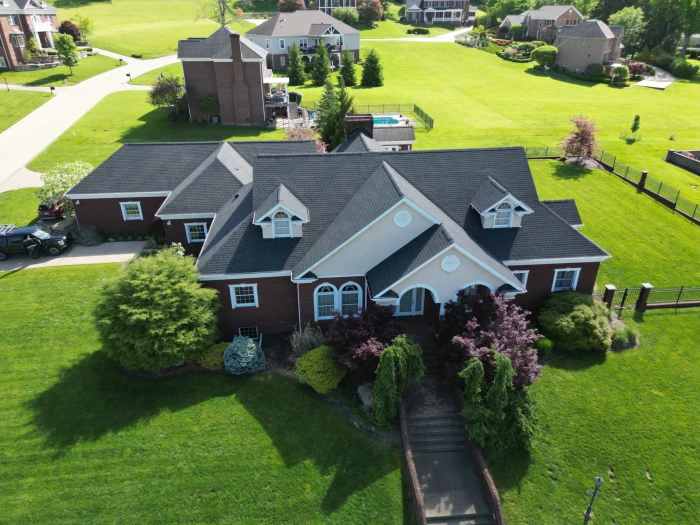
Buckeye Lake's housing character is unlike any other community in Licking County. Lake cottages, postwar bungalows, and mid-century homes built close to the water present rooflines that vary dramatically from lot to lot depending on when each structure was built and how close it sits to the shoreline. Age is the constant. Flashing gets cut on site to match each roofline's exact geometry rather than fitted from prefabricated stock.
Request a FREE Estimate
We Offer Financing Call Us For Details
Serving Buckeye Lake and the Surrounding Area
Licking County roofing projects from the See our Buckeye Lake, OH Page. include Buckeye Lake, where 1,087 occupied housing units reflect a community with a 74.9 percent owner-occupancy rate. Ownership runs high. That three-in-four ownership figure means most Buckeye Lake households own the roof above them and absorb the full cost of whatever condition it is in, with no landlord involved in the maintenance decision.
Buckeye Lake's median year built is 1975, putting the average home at roughly 51 years old. Fifty-one years matters. Materials installed in the mid-1970s were rated for 20 to 25 years by most manufacturers, which means a substantial share of Buckeye Lake's housing stock has been operating well beyond any original warranty coverage for decades. An inspection is the only way to know what condition the deck and flashing are actually in.
Roofing Conditions in Buckeye Lake
Ohio's oldest state park sits at Buckeye Lake, which formed as a canal reservoir in the early 1800s and became one of the state's earliest resort communities by the late 19th century. That origin shaped everything about the housing. Pre-1940 cottages and bungalows account for roughly 20 percent of the residential inventory, many still carrying original wood sheathing beneath multiple layers of patched roofing material accumulated over several replacement cycles. Mid-century construction and postwar vacation homes fill out the rest of the stock, most of them sitting close to the water with low eaves and short overhangs that concentrate ice damming at the roof edge during Ohio winters.
Proximity to water is the primary driver of accelerated roofing failures at Buckeye Lake. Seasonal moisture cycles create conditions where attic condensation builds up in winter and dissipates in summer, stressing older sheathing from below while weathering degrades the surface materials from above. Double exposure is the result. On pre-1940 cottages with original board sheathing, that combination of interior condensation and exterior weathering causes sheathing to soften and lose nail-holding capacity well before the surface shingles show visible deterioration. Even on mid-century homes with plywood decking, the waterside exposure accelerates granule loss and flashing corrosion at a faster rate than comparable inland properties experience.
On March 14, 2024, tornadoes moved through central Ohio and Licking County received a primary federal disaster designation under FEMA DR-4777. Wind ran unobstructed across the water. Cottages and bungalows with low-pitched rooflines and aging shingles are particularly vulnerable to ridge cap displacement and step flashing failure during high-wind events. Ohio gives homeowners one year from a covered event to file a property insurance claim, and any Buckeye Lake homeowner who has not had the roof inspected since March 2024 should schedule a walkthrough before the next event adds to unresolved damage.
What Our Customers Say
EXCELLENTTrustindex verifies that the original source of the review is Google. Steve and his guys were fantastic!! The job was done in a timely manner and the site was kept clean and free of debris. They are very professional and very easy to work with!!Posted onTrustindex verifies that the original source of the review is Google. Very satisfied with Platinum Exteriors work. Was quick and good prices. Highly recommend.Posted onTrustindex verifies that the original source of the review is Google. What a GREAT COMPANY...DID A GREAt job...workers are great,,,not a thing left behind...Posted onTrustindex verifies that the original source of the review is Google. Platinum Home Exteriors was very easy to work with. I made phone calls to 4 other contractors and Steven was the only one to return my call. He thoroughly explained our options. He was very polite and professional. His crew completed the job in one day. They did an excellent job. You can’t go wrong with Platinum!Posted onTrustindex verifies that the original source of the review is Google. Steve Yoder and his crew did a fantastic job of installing our new roof. Their price quote was 25% lower than my other bids and the work was absolutely stellar. They arrived on time , covered the shrubs, moved the outdoor furniture, and planters. When the job was done ,which took them 3 hours and 45 minutes , they returned all the plants and furniture to their place and even ran a magnet over the yard and driveway to make sure all the nails were picked up Cannot say enough good things about this crew. Great people and great job at a very fair price. Highly RecommendPosted onTrustindex verifies that the original source of the review is Google. Steve and his crew are probably the best you can find for roofing very professional and they get the job done asap l couldn’t have found anyone betterPosted onTrustindex verifies that the original source of the review is Google. Steve was very nice young man. Very polite and easy to talk with. Was very willing to help and figure out best way to accomplish the task. Very effeicient and quick to get the work completed. If any issues arise he will work with you to fixed the problem. His work was excellent and it was excatly what I was wanting. I will call him in the future for any other projects I will need to have done,Posted onTrustindex verifies that the original source of the review is Google. So great to work with. Beautiful craftsmanship, clean worksite, solid communications. Really appreciate their care & attitude to timely completion of wonderful new roof & guttersPosted onTrustindex verifies that the original source of the review is Google. Platinum Home Exteriors is awesome. Showed up early and finished our large roof in 8 hours! Cleaned up everything like they were never here, in addition they have very competitive pricing. Steve Yoder is a great guy to deal with.Posted onTrustindex verifies that the original source of the review is Google. These guys arrived at 6:30am and had my new roof on and headed home at 4:00pm. They did a wonderful job and cleaned up all the trash and took it with them. They’re hard workers and don’t waste time getting the job done. I love my new roof and it’s made a big difference in heating and cooling my house along with reducing outside noise. I give this company a 5 out of 5 and recommend them to anyone who is looking to replace their existing roof.
Roofing Permits in Buckeye Lake
Pulling a building permit in Licking County is Platinum's job, not the homeowner's. Every roof replacement in Buckeye Lake legally requires a permit before installation begins, and the county process involves an application, a materials review, and a final inspection before the project closes out. Platinum handles all of it. From the initial application through inspection scheduling and final sign-off, the homeowner's only job is approving the written estimate. No Buckeye Lake homeowner has ever had to visit a county office or chase down an inspection on a Platinum project.
Roofing Services in Buckeye Lake, OH

Roof Replacement in Buckeye Lake
A Roof Replacement on a 1970s or older home begins with a deck assessment to determine how much of the original sheathing is still structurally sound after decades of lakeside moisture exposure. Deck condition sets the scope. Platinum installs Class 4 impact-rated shingles on every replacement and provides documentation of the upgrade for insurers who offer reduced premiums to owners with impact-rated materials on file.

Roof Repair in Buckeye Lake
Eave flashing failures and softened sheathing at low-pitched sections are the failure modes that generate most Roof Repair calls at Buckeye Lake, and catching them at the surface stage is the difference between a targeted repair and a full deck replacement. Act before moisture spreads. A repair that addresses a failing flashing section while the sheathing below is still dry costs a fraction of what re-sheathing adds once standing water has had time to saturate the deck.

Metal Roofing in Buckeye Lake
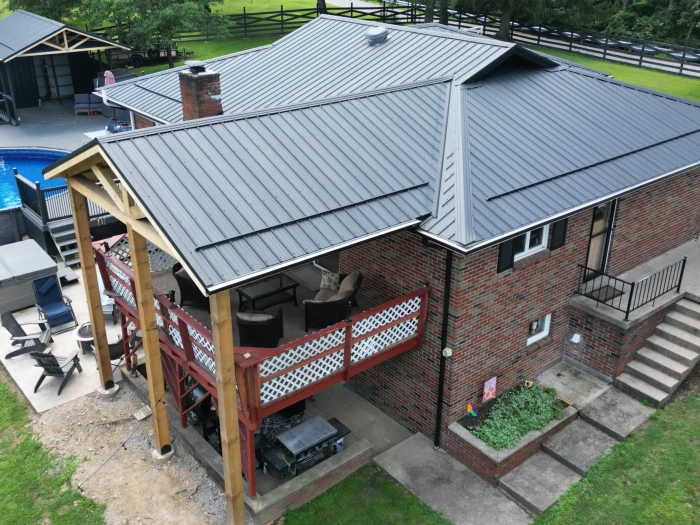
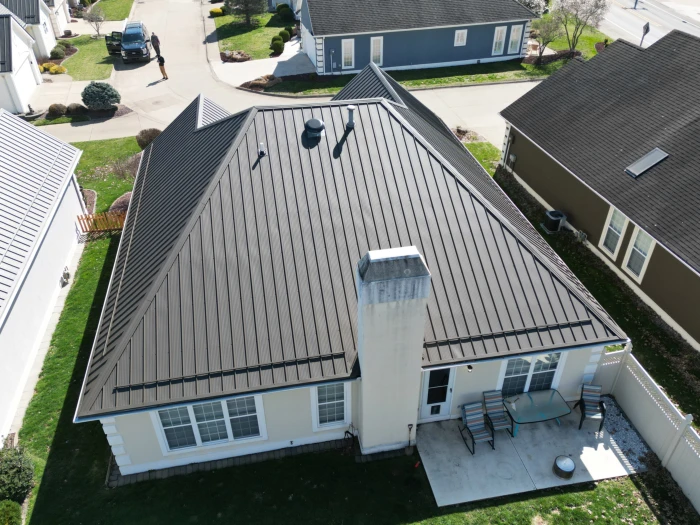
Metal Roofing is a strong long-term option for Buckeye Lake homeowners replacing a 1970s roof for what they intend to be the final time. Longevity is the argument. Standing seam and corrugated steel handle Ohio's freeze-thaw cycle without the granule loss and flashing corrosion that accelerate on lakeside asphalt installations, and metal sheds ice load faster at the eave edge, where shoreline humidity concentrates most aggressively on low-pitched cottage rooflines.

Seamless Gutters in Buckeye Lake
The shoreline context at Buckeye Lake makes gutter failures more consequential than on an inland property, because roof runoff that bypasses a failed system has a direct path toward the foundation and the water's edge. Joint failures accelerate here. Seams in sectional gutter systems collect debris, hold moisture against the fascia board, and cause rot that spreads into the soffit long before the gutter itself shows visible damage. Seamless Gutters fabricated on site eliminate those joints, with every run cut to the exact length of the roofline and no seam joints anywhere along it.

Storm Damage and Insurance Claims in Buckeye Lake
Ohio homeowners have one year from a covered storm event to file a property insurance claim, and Licking County's federal designation under FEMA DR-4777 following the March 14, 2024 tornadoes means that clock has run on those specific events. New storms reset the timeline. Platinum accompanies every Buckeye Lake homeowner during the Storm Damage and Insurance Claims to document ridge cap displacement, eave flashing failure, and low-pitched section damage that adjusters routinely miss on lakeside cottage rooflines. Undocumented damage becomes out-of-pocket cost when the claim report does not reflect what the wind actually did.
Get a Free Estimate For Buckeye Lake, Ohio
Amish Roofing Crews in Buckeye Lake
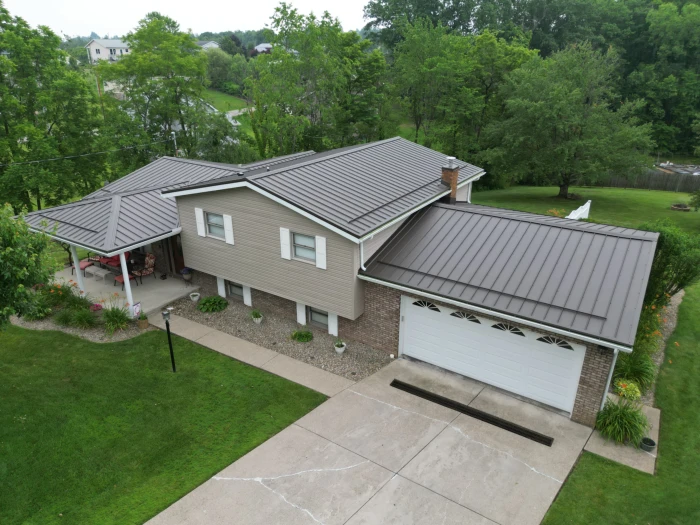
Every Buckeye Lake inspection starts with an Amish crew member walking the surface before any measurement is recorded. Satellite images miss the details. On lakeside cottages and mid-century bungalows, the physical inspection identifies board sheathing softness, eave flashing corrosion in a waterside environment, and whether low-pitched sections have held standing water long enough to saturate the deck below. Measurements come from the roof itself, and flashing gets cut on site to fit the exact pitch and profile of each plane rather than adapted from prefabricated stock.
The same Amish crew that measured stays through installation and final cleanup. No handoff takes place. At the close of every Buckeye Lake project, the crew runs a nail sweep across the full work area and clears any debris from the gutters before leaving the property. Platinum backs the completed installation with the Industry Leading Craftsmanship Warranty.
How a Buckeye Lake Roof Job Works
Free Inspection
An Amish crew member visits the property in person, physically walks the roof, and documents all material and deck conditions before any quote is prepared.
Written Estimate
A fixed-price written estimate is provided from in-person measurements before any work begins.
Permit Filing
Platinum files the required permit with the appropriate Licking County permit authority before the installation crew arrives at your property.
Installation
The same Amish crew handles every phase, cutting all flashing on site and completing a nail sweep and gutter clearance before leaving.
Industry Leading Craftsmanship Warranty
The same Amish crew handles every phase, cutting all flashing on site and completing a nail sweep and gutter clearance before leaving.
Request a Free Estimate
Buckeye Lake Frequently Asked Roofing Questions
Q:Do I need a permit for a roof replacement in Buckeye Lake?
Q:Does living near the water affect how fast my roof deteriorates?
Q:How do I file a storm damage claim on a Buckeye Lake cottage roof?
Communities We Serve from Buckeye Lake
For roof replacement, repair, and gutter work throughout Buckeye Lake, call Platinum Home Exteriors at (330) 275-0935.