
Amish Roofing Contractor Serving Northern West Virginia
Platinum Home Exteriors holds West Virginia contractor license WV060956. We're based in Millersburg, Ohio, and we've been sending Amish crews into northern West Virginia because the territory connects directly to the Ohio and Pennsylvania counties where most of our work runs. The 10 counties we serve stretch from the Northern Panhandle, where Wheeling sits at the meeting point of three states, down through the Ohio River corridor to Parkersburg and Wood County in the south.
West Virginia requires a state contractor license for residential work above $5,000. A lot of contractors crossing the state line to pick up work don't carry it. We do, and our license number is on every contract, estimate, and job site posting we put up in the state. If you're comparing contractors for a WV project, that's the first thing worth asking about.
Request a FREE Estimate
We Offer Financing Call Us For Details
10 Counties, Roughly 120,000 Homes
The 10 counties we serve in northern West Virginia contain roughly 120,000 housing units combined, with Wood County and Ohio County making up the largest concentrations. Wood County, where Parkersburg sits at the mouth of the Little Kanawha River, is the most densely settled part of our WV territory. Ohio County, home to Wheeling, anchors the Northern Panhandle and borders both Pennsylvania and Ohio directly across the river. These are industrial river cities with aging housing stock, a lot of it built during the steel and manufacturing decades of the mid-twentieth century, and a substantial share of it past the point where an inspection is long overdue.
The Northern Panhandle counties, Hancock, Brooke, Ohio, and Marshall, run north to south along the Ohio River from the Pennsylvania line down to Moundsville. Wetzel and Tyler Counties continue that corridor south from Marshall. Pleasants, Ritchie, and Wirt Counties move inland from the Ohio River toward the central part of the state, covering the rural communities between the river and the higher terrain to the east. Wood County sits at the southern end of our territory, covering Parkersburg, Vienna, and the surrounding communities along the river.
Each county has a dedicated page on this site covering the cities and communities we serve in that area, local permit contacts, and photos from recent jobs.
What Northern West Virginia Does to a Roof
Northern West Virginia falls in IECC Climate Zone 5A across the full territory, and the dominant roofing stress is the same as it is across the river in Ohio: freeze-thaw cycling through winter months, repeated temperature crossings of 32 degrees that work on any compromised seal or loose fastener the same way regardless of which side of the state line the house is on. The Appalachian terrain adds a layer to this that flat or rolling country doesn't have. Elevation changes here are sharp and frequent, and a home sitting 800 feet higher on a ridge behind Wheeling sees different conditions than a home in the valley below it: more wind exposure, heavier ice loads in a hard winter, and a faster pace of granule loss on south-facing surfaces.
Hail moves through this corridor regularly. The NWS Pittsburgh office covers the Northern Panhandle counties, and the NWS Charleston office covers the southern end of our territory around Wood, Wirt, Ritchie, and Pleasants. Both offices log recurring severe storm activity in the Ohio River valley each season. The terrain funnels storm systems along the river corridor, and hail events that hit the Ohio side of the river typically reach the West Virginia side as well. For homes in this territory, a Class 4 impact-rated steel roof is worth a direct conversation, particularly if the current roof is more than 15 years old and has seen multiple hail events without a formal inspection.
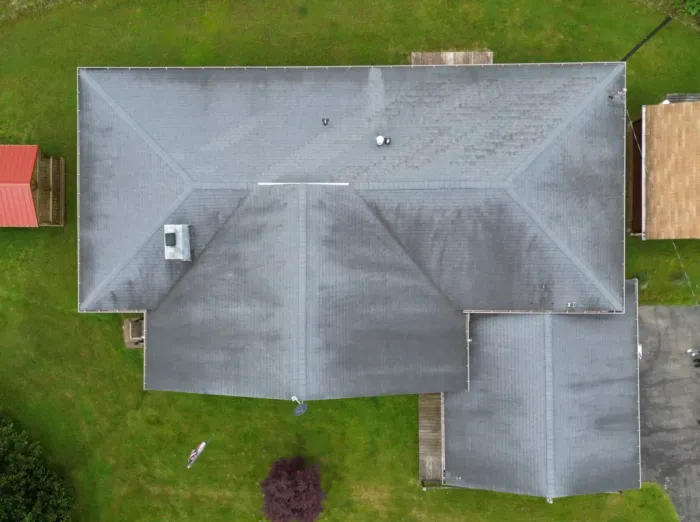
The Ohio River valley creates the same humidity problem here that it creates in eastern Ohio and southwestern Pennsylvania. Low terrain along the river holds moisture longer than the ridgelines above it, and that sustained humidity drives algae and moss colonization on north-facing shingle surfaces. In Wood County and along the Wetzel and Tyler County stretches of the river, the combination of valley humidity and an older housing stock means a meaningful share of roofs have biological staining that signals years of moisture accumulation, not just this season's growth. Metal roofing does not support that growth. Standing seam steel, installed correctly, addresses the humidity problem and the hail problem in a single material choice.
What Our Customers Say
EXCELLENTTrustindex verifies that the original source of the review is Google. Steve and his guys were fantastic!! The job was done in a timely manner and the site was kept clean and free of debris. They are very professional and very easy to work with!!Posted onTrustindex verifies that the original source of the review is Google. Very satisfied with Platinum Exteriors work. Was quick and good prices. Highly recommend.Posted onTrustindex verifies that the original source of the review is Google. What a GREAT COMPANY...DID A GREAt job...workers are great,,,not a thing left behind...Posted onTrustindex verifies that the original source of the review is Google. Platinum Home Exteriors was very easy to work with. I made phone calls to 4 other contractors and Steven was the only one to return my call. He thoroughly explained our options. He was very polite and professional. His crew completed the job in one day. They did an excellent job. You can’t go wrong with Platinum!Posted onTrustindex verifies that the original source of the review is Google. Steve Yoder and his crew did a fantastic job of installing our new roof. Their price quote was 25% lower than my other bids and the work was absolutely stellar. They arrived on time , covered the shrubs, moved the outdoor furniture, and planters. When the job was done ,which took them 3 hours and 45 minutes , they returned all the plants and furniture to their place and even ran a magnet over the yard and driveway to make sure all the nails were picked up Cannot say enough good things about this crew. Great people and great job at a very fair price. Highly RecommendPosted onTrustindex verifies that the original source of the review is Google. Steve and his crew are probably the best you can find for roofing very professional and they get the job done asap l couldn’t have found anyone betterPosted onTrustindex verifies that the original source of the review is Google. Steve was very nice young man. Very polite and easy to talk with. Was very willing to help and figure out best way to accomplish the task. Very effeicient and quick to get the work completed. If any issues arise he will work with you to fixed the problem. His work was excellent and it was excatly what I was wanting. I will call him in the future for any other projects I will need to have done,Posted onTrustindex verifies that the original source of the review is Google. So great to work with. Beautiful craftsmanship, clean worksite, solid communications. Really appreciate their care & attitude to timely completion of wonderful new roof & guttersPosted onTrustindex verifies that the original source of the review is Google. Platinum Home Exteriors is awesome. Showed up early and finished our large roof in 8 hours! Cleaned up everything like they were never here, in addition they have very competitive pricing. Steve Yoder is a great guy to deal with.Posted onTrustindex verifies that the original source of the review is Google. These guys arrived at 6:30am and had my new roof on and headed home at 4:00pm. They did a wonderful job and cleaned up all the trash and took it with them. They’re hard workers and don’t waste time getting the job done. I love my new roof and it’s made a big difference in heating and cooling my house along with reducing outside noise. I give this company a 5 out of 5 and recommend them to anyone who is looking to replace their existing roof.
Licensing and Permits in West Virginia
West Virginia requires a state contractor license for any residential work valued at $5,000 or more. This is not a registration or an administrative formality. It is a licensed classification issued by the West Virginia Contractor Licensing Board, requiring an exam, insurance, workers' compensation coverage, and annual renewal. Platinum Home Exteriors holds WV contractor license WV060956. Under WV law, that number must be posted at every job site and included in all contracts and advertisements. We include it on everything.
This matters in practice because the northern West Virginia market has a problem with unlicensed out-of-state contractors who cross the Ohio or Pennsylvania border to pick up work and carry no WV license. The state's enforcement mechanism is real: the Contractor Licensing Board can issue fines starting at $200 for a first unlicensed offense and escalating from there. More importantly, a homeowner who hires an unlicensed contractor has limited legal recourse if the work fails. Asking for a WV license number before signing anything costs nothing and tells you quickly whether you're dealing with a contractor who operates properly in the state.
Permits are local in West Virginia, managed at the city or county level. Requirements vary by municipality, and the only way to know what applies to your address is to check. We confirm the requirement before any project starts, pull the permit where one is needed, and handle required inspections. County pages on this site list local permitting contacts for each area.
What We Do

Roof Replacement
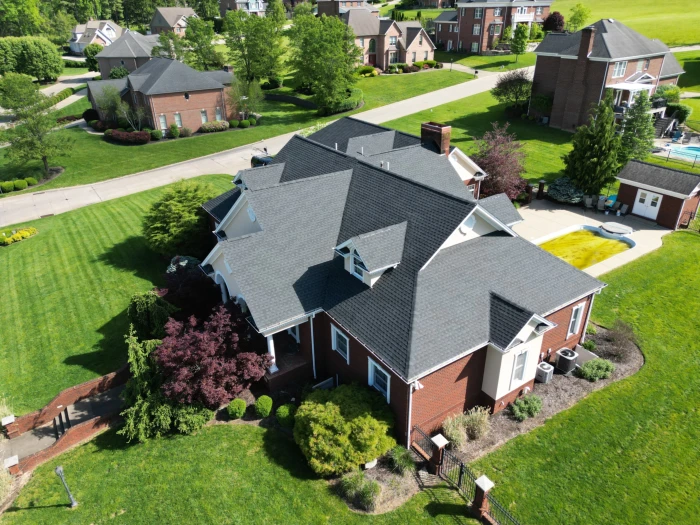
A replacement is more than putting new material on old decking. Underlayment, ventilation, flashing, ridge caps, and the surface layer all have to go in as an integrated system, each component tied to the next, or the weakest point becomes the first place water finds its way in. Our crews install both asphalt shingles and steel panels, and the right choice depends on the home, the location, and what the homeowner wants the roof to do over the next several decades.
For asphalt, GAF Timberline HDZ and Owens Corning Duration are the products we install most often. Both are rated for Zone 5A freeze-thaw conditions and carry strong manufacturer warranties. Most asphalt replacements finish in one to two days.
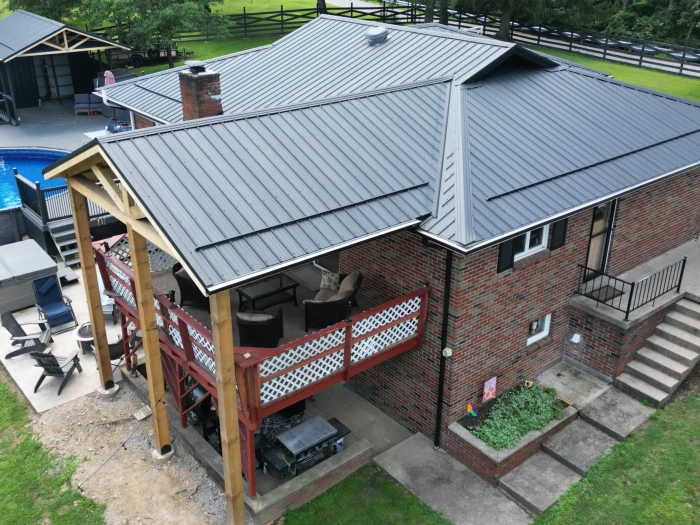
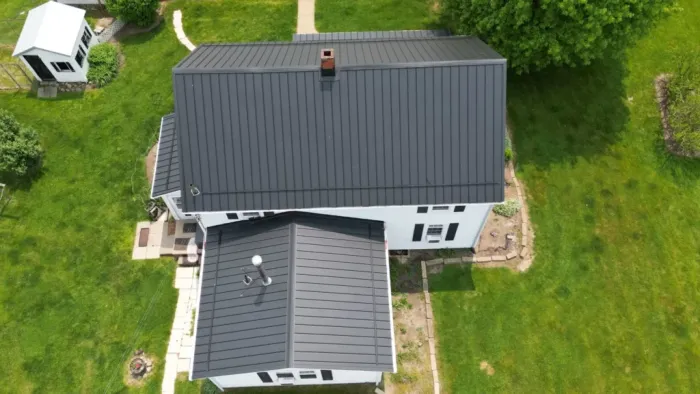
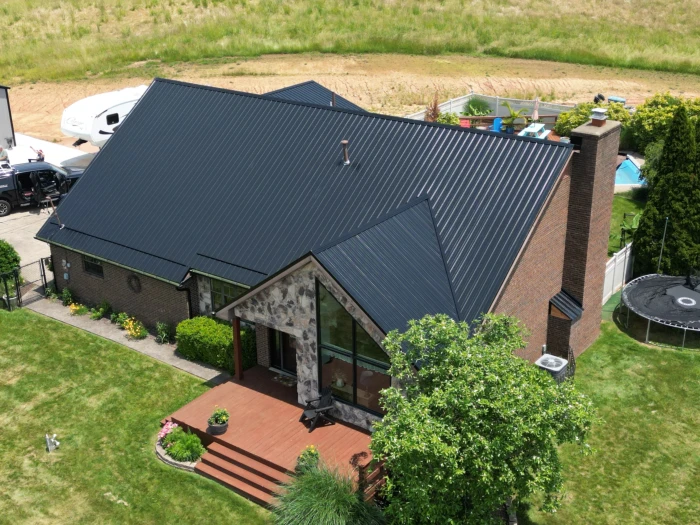
For metal, we install standing seam and exposed fastener steel panels. Standing seam is the right fit for most residential roofs: the fasteners sit beneath interlocking panel seams, so there are no exposed screws to back out over time and no gasket failures creating leak points years down the road. Lifespan on a properly installed standing seam roof runs 40 to 70 years in this climate. Exposed fastener panels are the standard for agricultural buildings, barns, and shops across our territory, and we do a significant amount of that work across eastern Ohio. Both steel options carry a Class 4 impact resistance rating and handle freeze-thaw cycling better than asphalt over a long run. If you’re replacing a roof for the last time, steel is the conversation worth having.

Roof Repair
Missing shingles, active leaks, failed flashing around chimneys or skylights, and soft spots in the decking are all within our repair scope. We find the actual source of the problem on the first visit rather than treating what’s visible and leaving the underlying cause for the next heavy rain to expose. Scheduling across all 18 Ohio counties is typically within the same week. For active leaks, we get emergency tarping in place while the full repair is booked.

Seamless Gutters
A gutter system that’s failing sends water directly to your foundation, behind your fascia boards, and eventually into your basement or crawlspace. Repairs to those systems cost far more than a new gutter run. We cut seamless aluminum gutters on-site to the exact dimensions of your home, no joints between downspouts that open over time and create new leak points. Gutter guards are available for properties where debris from overhanging trees makes clogging a recurring problem every fall.

Storm Damage Repair
After a hail event or wind storm, the first question is always whether the damage qualifies for an insurance claim. We do the inspection, document the damage with the photos and measurements your adjuster needs, and walk you through what we found before anyone files anything. If there’s an active leak, tarping goes up the same visit. Ohio gives homeowners one year from the event date to file a storm damage claim, and a lot of people reach that deadline before they’ve had anyone look at the roof. Reach out as soon as you suspect damage, even if you’re not sure it qualifies.
What Northern West Virginia Does to a Roof
Northern West Virginia falls in IECC Climate Zone 5A across the full territory, and the dominant roofing stress is the same as it is across the river in Ohio: freeze-thaw cycling through winter months, repeated temperature crossings of 32 degrees that work on any compromised seal or loose fastener the same way regardless of which side of the state line the house is on. The Appalachian terrain adds a layer to this that flat or rolling country doesn't have. Elevation changes here are sharp and frequent, and a home sitting 800 feet higher on a ridge behind Wheeling sees different conditions than a home in the valley below it: more wind exposure, heavier ice loads in a hard winter, and a faster pace of granule loss on south-facing surfaces.
Hail moves through this corridor regularly. The NWS Pittsburgh office covers the Northern Panhandle counties, and the NWS Charleston office covers the southern end of our territory around Wood, Wirt, Ritchie, and Pleasants. Both offices log recurring severe storm activity in the Ohio River valley each season. The terrain funnels storm systems along the river corridor, and hail events that hit the Ohio side of the river typically reach the West Virginia side as well. For homes in this territory, a Class 4 impact-rated steel roof is worth a direct conversation, particularly if the current roof is more than 15 years old and has seen multiple hail events without a formal inspection.
The Ohio River valley creates the same humidity problem here that it creates in eastern Ohio and southwestern Pennsylvania. Low terrain along the river holds moisture longer than the ridgelines above it, and that sustained humidity drives algae and moss colonization on north-facing shingle surfaces. In Wood County and along the Wetzel and Tyler County stretches of the river, the combination of valley humidity and an older housing stock means a meaningful share of roofs have biological staining that signals years of moisture accumulation, not just this season's growth. Metal roofing does not support that growth. Standing seam steel, installed correctly, addresses the humidity problem and the hail problem in a single material choice.
How a Project Works
Free Inspection
You call or submit online, and we schedule a free inspection at your home, almost always within the same week regardless of which county you’re in. Our inspector gets on the roof, documents what he finds with photos and measurements, and walks you through every finding before leaving. You’ll know what the roof needs before any decisions are made, and the inspection costs nothing.
Written Estimate
The estimate breaks down materials, labor, permits, and cleanup as separate line items so you can see exactly what you’re paying for. We walk you through the product options, explain what actually differs between them, and help you choose what makes sense for your home and your situation. Financing is available for qualifying homeowners.
Installation
The crew arrives on the date you agreed on and works through the job. Standard residential replacements take one to two days depending on size, pitch, and how many old layers need to come off. Every component goes in to specification. That’s not language we use to sound thorough. It’s the thing that separates a roof that performs for 30 years from one that starts giving problems in eight.
Cleanup and Walkthrough
When the last shingle is in, the crew sweeps the yard, driveway, and landscaping with a magnetic roller to recover any fasteners that came down during the install, then runs a second pass before loading up. Then they walk the finished roof with you. You see the work before anyone leaves.
Warranty and Follow-Up
We register your manufacturer warranty before leaving and hand you all project documentation on the spot. We follow up after the job to confirm everything is performing. If something isn’t right, we fix it at no cost.
What Makes an Amish Crew Different
The men who run our crews didn’t take a roofing course. They came up building things from the time they were old enough to work alongside their fathers, in a community where construction is a core trade and where the quality of what you build reflects on you directly. That kind of training produces a different orientation to the work than you get from a crew assembled for the season and dispatched from a dispatcher board.
It shows in the specifics. The start time is early and consistent. Fasteners go in at the right angle and the right depth, not because a foreman is checking but because that’s the standard they hold themselves to. Flashing gets sealed the way the manufacturer specifies. When the roof is done, the cleanup gets the same attention as the installation: a magnetic roller goes through the yard and driveway twice to pick up any fasteners that came down, and the crew walks the finished roof with you before anyone leaves the property. None of that is policy we enforce from an office. It’s how these men work.
Every roof we install is backed by manufacturer warranties from GAF and Owens Corning and our own workmanship guarantee. We stand behind the work because we know how it was built.
Find Your County
Each county page covers the cities and townships we serve in that area, local permit information, and recent job photos from that county.