
Storm Damage Roofing & Insurance Claims in Wheeling, WV
Storm damage roofing in Wheeling, West Virginia presents challenges that do not apply in newer markets. Platinum Home Exteriors works with Ohio County homeowners to document damage correctly, navigate insurance claims, and replace failing roofs with a system built to outlast the next several storm seasons. Platinum is based in Millersburg, Ohio, serves the Upper Ohio Valley, and brings the same Holmes County Amish crews to every job from inspection through installation.
Wheeling's housing stock is among the oldest in the country. The median construction year is 1950, and more than 40 percent of homes were built before 1940. A roof installed on a pre-war or postwar house has often been replaced at least once and, in many cases, layered rather than stripped, creating hidden moisture pathways that compound with each severe weather cycle. When hail or high winds affect Ohio County, the underlying condition of those older roof systems makes storm damage harder to see from the ground and easier for a West Virginia insurer to characterize as pre-existing deterioration rather than storm loss.
Request a FREE Estimate
Most hail damage to asphalt shingles cannot be identified without a close surface inspection. Granule displacement and mat bruising happen at the point of impact and do not produce visible cracking or missing shingles in the early stages. The Ohio Valley corridor running through Ohio County sits squarely within the NWS Pittsburgh forecast area, which maintains Wheeling as one of its six regional climate monitoring sites. A home that absorbs damage in one storm and goes uninspected can sustain compounding losses through several subsequent rain cycles before the evidence of a specific event is clear enough to support a claim.
We Offer Financing Call Us For Details
Emergency Roof Inspection After a Storm — Call (330) 275-0935
The window between a storm event and a successful insurance claim is shorter than most Wheeling homeowners expect. Hail damage to asphalt shingles works silently. The granule surface absorbs the impact, the mat underneath fractures or softens, and moisture begins penetrating with each subsequent rain. No visible leak appears until the damage has progressed well past the point where a single-storm cause is clear to document. Tying specific damage to a specific weather event requires a timely, written inspection report with photographs taken while the evidence is fresh and the storm date recent enough to be verifiable through NWS Pittsburgh records.
Platinum's storm inspection covers the full roof surface, all flashing transitions, ridge and valley systems, gutters, downspouts, and any collateral damage on exterior materials. The findings go into a written report with photographs formatted for insurance submission. When the adjuster schedules a site visit, Platinum's crew attends that walk. Having the contractor who documented the damage present during the adjuster walk removes the source of disputed claims that surfaces most often: differing interpretations of scope between a written report submitted in advance and what the adjuster observes independently.
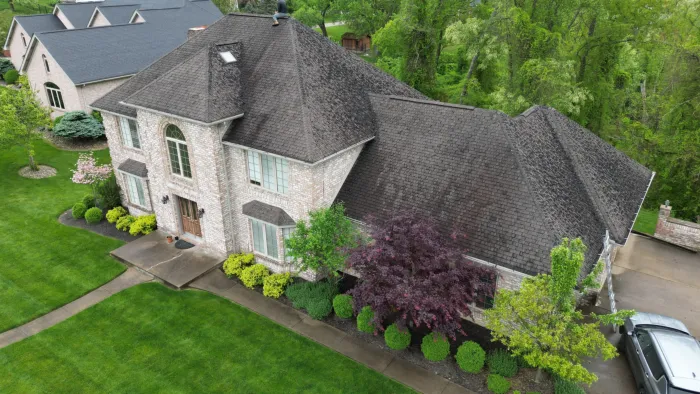
Wind damage indicators: From the ground, look for missing or displaced shingles, lifted ridge caps, and debris from soffit, fascia, or trim components around the roofline. On older Ohio County homes, lifted flashing around chimneys and dormers is a common wind-damage signature that only becomes apparent as a water stain on an interior ceiling.
Hail damage indicators: Shingle damage requires a close-up inspection and will not be apparent from street level in most cases. Check aluminum gutters, downspout elbows, exterior AC condenser fins, and window trim above grade for round impact dents, because those materials register hail at the same size thresholds that damage shingles and hold the evidence clearly without requiring a roof walk.
Water intrusion indicators: In the attic, look for staining on the sheathing or rafters, soft spots in the deck surface, and daylight visible through the decking. On interior ceilings, water marks and soft drywall directly below a roof surface or flashing transition are common early signs that an uninspected compromise is already progressing.
How West Virginia Homeowners Insurance Covers Roof Storm Damage
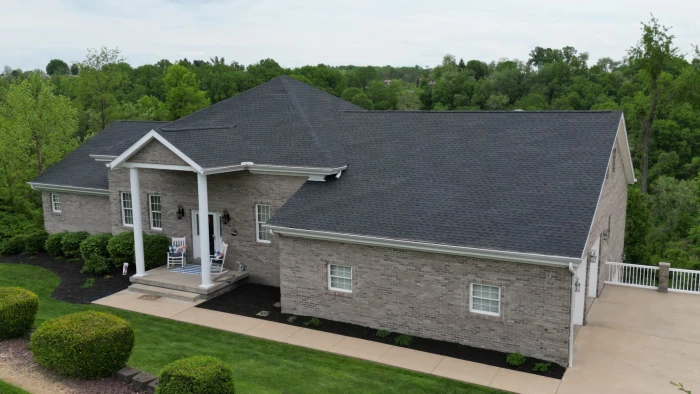
Standard HO-3 homeowners policies covering Wheeling properties include protection for sudden and accidental losses caused by wind, hail, falling trees and limbs, and water that enters the home through a storm-created opening. What those same policies exclude is damage attributed to age, wear, gradual deterioration, or maintenance that was deferred before the storm occurred. In Ohio County, where the median home was built in 1950 and a substantial share of the housing stock predates 1940, the line between storm damage and pre-existing condition is the pressure point West Virginia insurers apply most often when reviewing claims.
ACV vs. RCV: What Your Policy Actually Pays
A Replacement Cost Value policy entitles you to the full cost of replacing the damaged system with comparable materials. A standard residential replacement in the Wheeling market runs approximately $12,000 to $16,000, depending on square footage, pitch, and the complexity of flashing transitions on older homes. RCV policies release that payment in two stages. The first check covers the Actual Cash Value, the depreciated replacement cost minus your deductible. On an Ohio County roof with 20-plus years of service life, that first check might be $4,000 to $5,500 after a typical deductible of $1,500 to $2,500. Once the work is completed and documented, you submit the final invoice and receive the holdback, the remaining balance up to the full replacement cost.
One risk many West Virginia homeowners are not aware of: carriers have increasingly converted older roofs from RCV to ACV coverage at renewal, without prominent notification in the renewal packet. ACV policies do not release a second check. The depreciated payout is the full settlement. If the roof on your Wheeling home is more than 15 years old and you have not reviewed your policy recently, confirming the coverage basis before the next storm season is a practical step.
What West Virginia Insurers Are Likely to Deny
Roofs over 20 years old draw heightened scrutiny regardless of the severity of the triggering storm. West Virginia insurers reviewing Ohio County claims on pre-war and postwar housing stock will look closely for evidence of prior unrepaired damage, deferred maintenance, and gradual wear that they can attribute as contributing causes. A documented inspection report addresses those pressure points directly. It establishes the pre-storm condition of the surface, identifies damage that is clearly impact-related rather than wear-related, and gives the adjuster a factual basis for separating the storm loss from background deterioration. Without that documentation, the insurer's interpretation is the only one on the table.
The Platinum Storm Damage Claim Process
Emergency Inspection
Step 1: Emergency Inspection. Contact Platinum at (330) 275-0935 as soon as conditions allow a safe assessment. A crew travels to your Wheeling property, inspects the full roof surface and all associated components, and produces a written report with photographs documenting every area of storm-related damage. That report is formatted for direct submission to your carrier.
File Your Claim
Step 2: File Your Claim. Using Platinum's inspection report and photographs, you file a claim with your homeowners insurance carrier. The report provides the documentation your carrier needs to open the claim and schedule an adjuster visit. Filing promptly while the storm date is recent and NWS Pittsburgh records for Ohio County are current strengthens the connection between the damage and the event.
Review the Scope of Work
Step 3: Adjuster Walk, Platinum Is There. Platinum coordinates with your schedule to attend the adjuster's on-site inspection. Having the contractor who documented the damage present during the adjuster walk means the scope discussion happens in real time, with the actual roof surface visible, rather than after the fact through competing written interpretations. Discrepancies in scope are identified and addressed before the adjuster leaves the property.
Review the Scope of Work
Step 4: Review the Scope of Work. Once the insurer issues the approved scope of loss, Platinum reviews it against the original inspection findings. If the approved scope omits documented damage or underestimates the materials required for a code-compliant installation, Platinum initiates a supplement before any work begins. Supplements are a standard part of the claims process and exist to ensure the approved scope reflects actual field conditions on your Wheeling property.
Deductible and Start of Work
Step 5: Deductible and Start of Work. Your deductible is your out-of-pocket contribution to the replacement. Platinum does not waive, cover, or inflate around deductibles, as doing so constitutes insurance fraud under West Virginia law. Once the scope is confirmed and your deductible is collected, the Holmes County crew schedules your installation. All measurements are taken in person at your home, with no satellite estimates used for material ordering or flashing fabrication.
Emergency Inspection
Step 6: Final Documentation and Second Check. On RCV policies, the insurer withholds the depreciation balance until work is completed. Platinum provides a final invoice and completion documentation, which you submit to your carrier to release the holdback check. Platinum walks through the completed installation with you and confirms that all warranty documentation, including the Industry Leading Craftsmanship Warranty on labor and the manufacturer material warranty on the standing seam system, is properly registered in your name.
Why Metal Roofing Is the Right Answer After a Storm Claim in Wheeling
A storm damage claim creates a decision point that does not come around often for most homeowners. The deductible is already committed, the insurer has approved a replacement, and the only remaining question is whether to replace the damaged system with the same material or invest the difference between what insurance covers and the cost of a standing seam upgrade. On an Ohio County home with pre-war or postwar construction, that incremental cost difference buys a roof with engineering advantages relevant to Wheeling's specific weather conditions, one that will not require replacement again within most owners' expected occupancy.
Class 4 Hail Certification and West Virginia Insurance Premiums
Class 4 UL 2218 is the highest impact resistance rating available for residential roofing. The standard test drops two-inch steel balls from 20 feet onto a roofing surface to simulate large hail impact. Standing seam steel systems carrying that certification do not crack, fracture, or lose protective coating at impact points the way asphalt shingles do. Many West Virginia carriers offer premium discounts for Class 4 certified roofing, and those discounts carry real weight given the 10.3% statewide premium increase West Virginia homeowners absorbed in 2024. A standing seam roof installed after a Wheeling storm claim carries that discount across its full service life, 40 to 60 years under Ohio Valley conditions, while an asphalt replacement will require another full cycle in 20 to 25 years, resetting both the capital outlay and the discount clock.
Concealed Fasteners and Wind Uplift
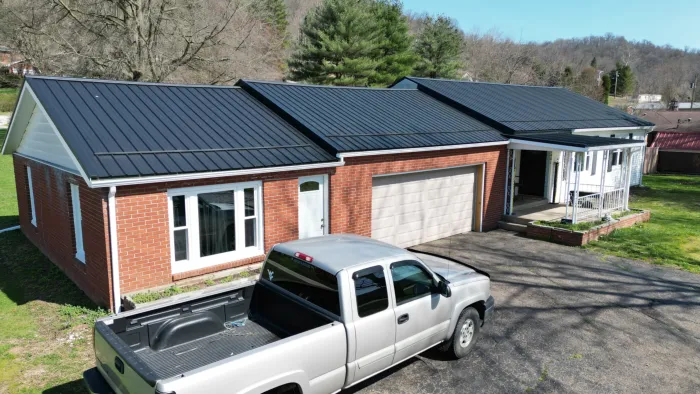
The failure mode that generates most wind claims on asphalt roofing is exposed fastener back-out. As the substrate expands and contracts through Ohio Valley temperature cycles, the fasteners holding shingle tabs and ridge caps in place work loose over seasons of thermal movement. When a high-wind event hits a roof with partially backed-out fasteners, the uplift force concentrates at those points and the tabs lift or strip. Platinum's standing seam panels use concealed floating clips with no exposed fasteners on the panel face. The clips allow the steel panels to expand and contract freely through the full temperature range, and the uplift load from high-wind events distributes across the full clip engagement rather than concentrating at fixed penetration points. That matters in Ohio County, which sits in a corridor where NWS Pittsburgh has documented damaging straight-line gusts during severe Ohio Valley storm systems.
One Roof, Not Three
A homeowner in Ohio County who replaces a damaged asphalt roof with asphalt today will face another full replacement in 20 to 25 years under Ohio Valley conditions, and likely a third replacement within a 60-year ownership horizon. Each cycle carries the full cost of materials, labor, waste removal, and the disruption of a major exterior project. A standing seam steel roof installed to Platinum's specification carries a 40- to 60-year service life expectancy, a manufacturer material warranty of up to 50 years, and the Industry Leading Craftsmanship Warranty on all labor and workmanship. The insurance claim moment is the point in the ownership cycle where upgrading costs least relative to the benefit. The system goes in at the same time and through the same disruption as a standard replacement.
What Our Customers Say
EXCELLENTTrustindex verifies that the original source of the review is Google. This place is amazing!!! They provided amazing customer service and put my roof on in about 5-6hrs! They were very clean. I love my roof and it was cheaper than all the other places in town.Posted on GoogleTrustindex verifies that the original source of the review is Google. Knowledgeable and professional crew.Posted on GoogleTrustindex verifies that the original source of the review is Google. Wonderful experience..wouldn’t hesitate to use them again..Steve and his whole crew went above and beyond to make it perfectPosted on GoogleTrustindex verifies that the original source of the review is Google. Platinum Home Exteriors did a metal roof over on my home after a wind storm did significant damage. My metal roof over was completed in hours and ahead of a schedule. Steven was great to work with and the roof is beautiful. No more shingles blowing off every year! Thanks!Posted on GoogleTrustindex verifies that the original source of the review is Google. They replaced our entire roof and installed a new roof. They did an excellent job. I would highly recommend them.Posted on GoogleTrustindex verifies that the original source of the review is Google. Great experience! My metal roof is beautiful and it was done quickly and professionally! Cannot recommend Platinum Home Exteriors enough!Posted on GoogleTrustindex verifies that the original source of the review is Google. Steven and his crew are top notch and work was completed in record time. Guys showed up at 6:30 am and started about 7:00 am getting ground area around house covered. They removed the old roof and underlayment in no time. They had the new roof along with all the underlayment and trim put on in a short time. They cleaned everything up and were heading out around noon after installing about 23 square on our ranch home. Price and quality of work was unmatched.Posted on GoogleTrustindex verifies that the original source of the review is Google. Phenomenal company! They helped us in a very stressful time. Getting a new roof is no easy time... or cheap time. They helpedPosted on GoogleTrustindex verifies that the original source of the review is Google. My wife and I were extremely pleased with the metal roofing job Platinum Home Exteriors did for us. Steven was great to work with—his proposal was clear, detailed, and had no hidden charges. The crew showed up at 6 AM, worked hard all day, and did an amazing job. It was impressive to see how seamlessly and effectively they worked together. We wouldn’t hesitate to recommend them and would use them again in a heartbeat!
The Storm Chaser Problem in Ohio County
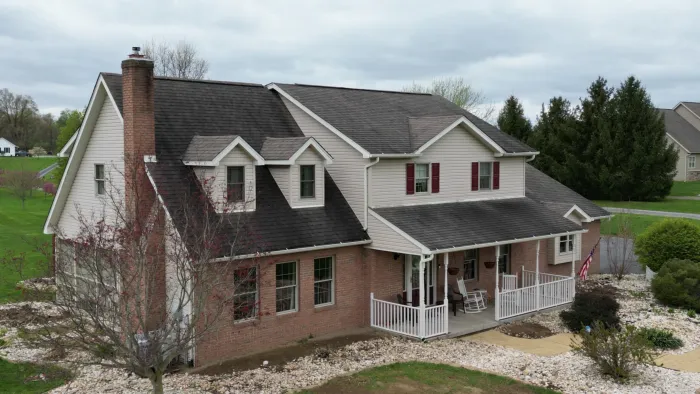
After any significant storm event, Wheeling and the surrounding Ohio County communities see an influx of out-of-state contractors and storm-chasing operations that follow weather damage along the Ohio Valley corridor. The pattern is consistent: a team arrives within days, canvasses affected neighborhoods door to door, offers rapid free inspections, and pressures homeowners to sign contracts on the spot. The salespeople involved are trained specifically for this kind of solicitation and are often not the people who will perform the installation, if any installation occurs at all. Actual roofing work, when it does happen, is frequently subcontracted to crews with no connection to the sales operation and no ongoing presence in the community. Installation failures on flashing transitions and penetrations around chimneys and vents may not become apparent until the first full heating and cooling cycle has passed. By then, the contracting operation may have reorganized, relocated, or become entirely unreachable.
West Virginia has seen federal wire fraud prosecutions and West Virginia Attorney General enforcement actions against contractors who solicited homeowners in storm-affected areas, including Ohio County, collected deposits, and failed to complete or perform any work. The WV AG's office ranks home improvement fraud among its recurring enforcement priorities, and complaints filed in connection with out-of-state and storm-chasing operations represent a persistent share of that caseload. Platinum Home Exteriors operates from Millersburg, Ohio, year-round. The Holmes County Amish crews who inspect and install for Wheeling homeowners are the same people on every job, with no subcontracting, no rotating labor pool, and no storm-following business model. The Industry Leading Craftsmanship Warranty on labor and workmanship is backed by a company with a fixed address and standing accountability, not a seasonal operation that will not answer the phone a year from now.
Request a Free Estimate
Wheeling Frequently Asked Roofing Questions
Q:Will my homeowners insurance cover storm roof damage in Wheeling?
Q:What is ACV versus RCV, and how does the payout process actually work?
Q:How long does a Wheeling homeowner have to file a storm damage claim?
Q:Does standing seam metal roofing reduce homeowners insurance premiums in West Virginia?
Q:How can I tell if my Wheeling roof has hail damage without getting on the roof?
Q:How do I avoid being taken advantage of by a storm chaser after a weather event?
Schedule an Emergency Roof Inspection in Wheeling, WV
The documentation window after a storm closes faster than most homeowners expect. Hail damage to asphalt shingles compounds with each rain cycle. Granule loss accelerates, the mat softens, and moisture penetration begins well before any visible leak appears on an interior ceiling. The time to establish a dated, storm-specific inspection record is now, while the event date is recent and NWS Pittsburgh records for Ohio County are current. Waiting until damage becomes visible from inside the home means the claim has already become harder to defend.
Platinum Home Exteriors serves Wheeling and the surrounding Ohio County area, including Moundsville, Weirton, Chester, St. Clairsville, Steubenville, and New Martinsville. Inspections are free, the written report is formatted for insurance submission, and the crew attends the adjuster walk. Call (330) 275-0935 to schedule. Additional information on services for the Wheeling area is available at Our Wheeling, WV roofing services, and a full overview of Platinum's Ohio Valley service area can be found at See our West Virginia roofing services page.